

Share This Article
Quick answer: Yes. Matcha has about 19 to 44 mg of caffeine per gram, so a typical 1 to 2 gram serving has roughly 19 to 89 mg, less than brewed coffee.
You’ve swapped your morning coffee for a bright green matcha latte, and by 10 a.m. you’re wondering why you still feel wide awake. So, does matcha have caffeine? It does, and sometimes more than you’d expect, because you drink the whole tea leaf ground into powder. The good news is that the amount is easy to estimate once you know how much powder goes into your cup.
Below, you’ll find real numbers by serving size, a side-by-side with coffee and other teas, why matcha’s energy can feel different, and how much is safe in a day.
This guide is general nutrition information. If you’re pregnant, take medication or are sensitive to caffeine, check with your doctor about how much is right for you.
Does Matcha Have Caffeine?
Yes, matcha has caffeine, and usually more per gram than regular green tea. Matcha is green tea from plants that are shaded from direct sunlight for most of their growing period, and the leaves are ground into a fine powder. A 2020 review of matcha research notes that “the tea bushes are covered using bamboo mats to shade the leaves from excessive direct sunlight.” With regular green tea, you steep the leaves and throw them away. With matcha, you whisk the powder into water or milk and drink all of it, caffeine included.
That review, published in the journal Molecules, reports that the caffeine in matcha “amounted to between 18.9 and 44.4 mg/g” (Kochman et al., 2020). For comparison, the same review notes that “most coffee beans will contain 10.0-12.0 mg caffeine/g of beans.”
That makes matcha powder more concentrated than coffee beans gram for gram. A cup of matcha still usually has less caffeine than a cup of coffee, though, because a matcha serving uses only a gram or two of powder, while a cup of coffee uses far more grounds.
How Much Caffeine Is in Matcha?
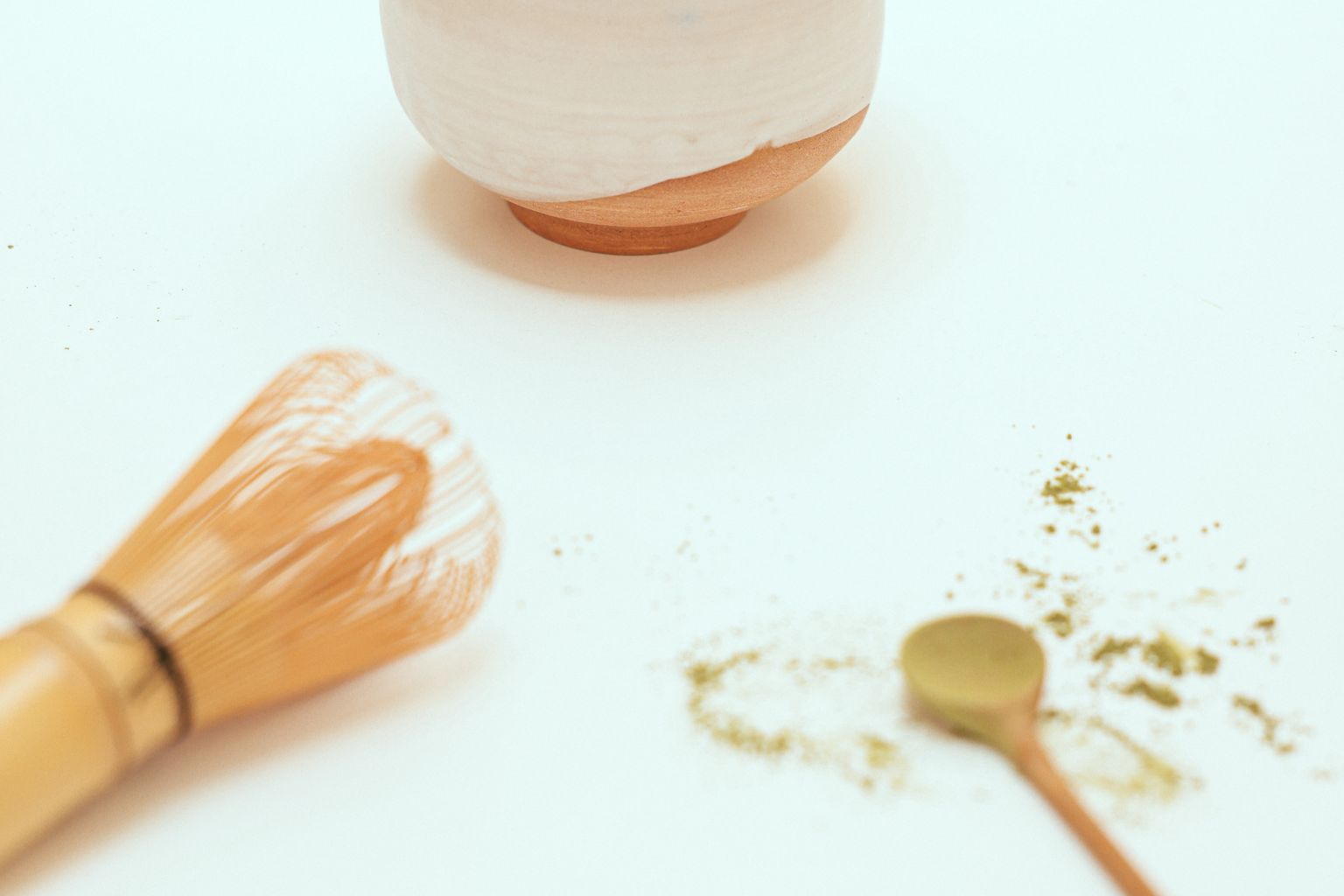
How much caffeine is in matcha depends mostly on how much powder you use. Once you know matcha has caffeine, the next question is how much ends up in your cup. Using the 19 to 44 mg per gram range from the research, here’s a practical guide. A level teaspoon of matcha weighs roughly 2 grams, but this varies with how tightly the powder is packed, so treat these as estimates.
| Serving | Approximate powder | Estimated caffeine |
|---|---|---|
| 1/2 teaspoon | About 1 g | About 19 to 44 mg |
| 1 teaspoon | About 2 g | About 38 to 89 mg |
| 2 teaspoons (a strong or “double” latte) | About 4 g | About 76 to 178 mg |
The wide range comes from the tea itself. Harvest time, growing conditions and grade all change how much caffeine ends up in the powder. Some brands list caffeine per serving on the label, which is the most reliable number for your specific matcha.
How you prepare it matters less. Whether you whisk matcha into hot water, cold water or milk, the caffeine stays the same because you drink the whole powder either way.
To estimate the caffeine in your own matcha, start with the label. If it lists caffeine per serving, use that number and adjust for how much powder you scoop. If it lists caffeine per gram, multiply by the grams you use. If the label gives no caffeine figure, assume the full 19 to 44 mg per gram range, and plan around the higher end if you’re sensitive. A kitchen scale makes this easy: weigh one of your usual scoops once, and you’ll know your serving size from then on.
How Much Caffeine Is in a Matcha Latte?
A matcha latte has exactly as much caffeine as the matcha powder in it. Milk, oat milk and sweeteners add no caffeine. A homemade latte with 1 teaspoon of matcha has about 38 to 89 mg, while a café latte made with two scoops can land well above 100 mg. If you want less caffeine, ask for a single scoop or use less powder at home.
When you order out, it helps to ask how many scoops of matcha go into each size, because cafés don’t always scale them the same way. Iced lattes are often made with the same amount of powder as hot ones, so a large iced drink can carry more caffeine than you’d guess from its mild taste. Sweetened powders and flavored syrups can also hide the matcha flavor, which makes it easier to drink a strong latte quickly.
Does Starbucks Matcha Have Caffeine?
Yes, Starbucks matcha drinks contain caffeine because they’re made with matcha powder. The exact amount depends on the drink size and how many scoops of matcha go in, and larger sizes usually get more scoops. For the current figure, check the nutrition details for your drink on the Starbucks app or website, since recipes and serving sizes can change.
Does Matcha Have More Caffeine Than Coffee?

Matcha usually has less caffeine than coffee per serving, although a strong matcha can come close to a cup of coffee. When people ask “does matcha have caffeine,” this comparison is usually what they want to know. The table below uses values from USDA FoodData Central, the US government’s food composition database, converted from milligrams per 100 grams to common serving sizes.
| Drink | Serving | Estimated caffeine |
|---|---|---|
| Matcha | 1 teaspoon (about 2 g) | About 38 to 89 mg |
| Brewed coffee | 8 fl oz | About 95 mg |
| Espresso | 1 fl oz shot | About 64 mg |
| Brewed black tea | 8 fl oz | About 47 mg |
| Brewed green tea | 8 fl oz | About 28 mg |
USDA lists brewed coffee at 40 mg per 100 g, espresso at 212 mg per 100 g, brewed black tea at 20 mg per 100 g and brewed green tea at 12 mg per 100 g. An 8-ounce cup weighs about 237 grams, which gives the estimates above.
So a teaspoon of matcha sits somewhere between a cup of black tea and a cup of coffee, and it’s close to a single shot of espresso.
Cup size changes the picture quickly. Using the same USDA value of 40 mg per 100 g, a 12-ounce coffee has about 142 mg, a 16-ounce coffee about 189 mg, and a 20-ounce coffee about 236 mg. Most people drink a single serving of matcha, so switching from a large coffee to a one-teaspoon matcha often cuts caffeine by half or more. A double-scoop matcha latte can match or beat a regular cup of coffee. Everyday coffee varies a lot too, depending on the beans, the brew strength and the cup size.
Why Does Matcha Caffeine Feel Different?
Matcha’s caffeine is the same molecule as coffee’s, but many people say the energy feels calmer and steadier. One likely reason is L-theanine, an amino acid found in tea leaves, which may change how caffeine feels.
The 2020 review notes that researchers have found “as much as 44.65 mg/g” of L-theanine in matcha samples, and that “the combination of l-theanine and caffeine may enhance concentration, vigilance and efficiency” (Kochman et al., 2020).
A small 2008 study tested this pairing directly. In 27 healthy volunteers, 50 mg of caffeine combined with 100 mg of L-theanine “improved both speed and accuracy of performance of the attention-switching task at 60 min” (Owen et al., 2008). That was a lab study using measured doses, so a cup of matcha won’t match it exactly, but it helps explain why matcha drinkers often describe a “focused” feeling.
Matcha may also feel smoother because many people sip it more slowly than coffee, often with food or milk. If you want the focused effect without the edge, start with a smaller serving and see how your body responds before scaling up.
If you’ve ever felt a little buzzy or “high” after matcha, it’s usually the caffeine, especially from a strong serving on an empty stomach. Eating something with it and using less powder can soften the effect.
Will Matcha Keep You Awake?
Matcha can keep you awake, especially if you drink it in the afternoon or evening or if you’re sensitive to caffeine. A strong teaspoon serving can carry as much caffeine as a shot of espresso, and caffeine can stay in your system for hours.
If you’ve noticed you can’t sleep after drinking matcha, try moving it earlier in the day and using a smaller serving. Many people find that a morning or early-afternoon cup works well, while a cup after dinner leaves them staring at the ceiling.
A few simple habits help you enjoy matcha without losing sleep:
- Set a personal cut-off time, such as early afternoon, and keep matcha before it.
- Use half a teaspoon for an afternoon cup if you still want the flavor.
- Skip a second matcha if you’ve already had coffee or soda that day.
- Notice how you sleep for a week after changing your timing, and adjust from there.
Good sleep depends on more than caffeine timing, too. Our guide to getting more deep sleep covers other habits that help, from a steady wake time to a cool, dark bedroom.
How Much Matcha Is Safe per Day?
For most healthy adults, a few servings of matcha a day fits within the FDA guidance. The FDA says: “For most adults, the FDA has cited 400 milligrams a day” as an amount not generally linked to dangerous, negative effects.
Using the estimates above, 400 mg works out to roughly 4 to 10 teaspoons of matcha a day, depending on how strong your powder is. That total includes caffeine from everything else you drink, like coffee, soda and energy drinks, so add it all up.
Here’s a simple example. A strong matcha latte made with 2 teaspoons could contain up to about 178 mg. Add one 8-ounce cup of brewed coffee at about 95 mg, and you’re near 273 mg for the day, still under the FDA figure but with less room for an afternoon soda or energy drink.
The FDA also notes “there is wide variation in both how sensitive people are to the effects of caffeine” and how fast they process it. Some medications and health conditions make people more sensitive, so a smaller amount may be your personal limit.
If you’re pregnant, the American College of Obstetricians and Gynecologists said in 2010 that “moderate caffeine consumption (less than 200 mg per day) does not appear to be a major contributing factor in miscarriage or preterm birth.” Count matcha toward that total and talk to your clinician. Children and teens should have much less caffeine than adults.
What Are the Downsides of Matcha?
The main downsides of matcha come from its caffeine and from how it’s often served. Too much caffeine can cause problems, and sweetened café drinks can add a lot of sugar.
Common issues include:
- Caffeine side effects: the FDA lists jitters, anxiety, insomnia, a fast heartbeat and an upset stomach as signs of too much caffeine.
- Sleep problems: an afternoon or evening cup can make it harder to fall asleep.
- Upset stomach: some people feel queasy drinking strong matcha on an empty stomach.
- Added sugar: many café matcha lattes are sweetened, which adds calories without you noticing.
- Cost: high-quality matcha is more expensive than most coffee or tea.
Most of these are easy to manage with a smaller serving, an earlier cup and an unsweetened or lightly sweetened recipe. If you buy café drinks often, ask for fewer pumps of syrup or an unsweetened version, and check the nutrition information for both caffeine and sugar before you make it a daily habit.
Is Matcha Caffeine-Free?
No, matcha isn’t caffeine-free, because it’s made from the same tea plant as green and black tea. Even a small half-teaspoon serving has about 19 to 44 mg of caffeine. If you want a warm, earthy drink without caffeine, choose a naturally caffeine-free herbal tea such as rooibos or chamomile.
If you’re asking “does matcha have caffeine” because you want to cut back, the easiest fix is to use less powder. A half-teaspoon latte still gives you the color and flavor with roughly half the caffeine of a full teaspoon. Adding more milk changes the taste and texture, but the caffeine stays tied to the amount of powder.
Frequently Asked Questions
Is matcha caffeine as strong as coffee?
Matcha caffeine is the same molecule as coffee caffeine, so it works the same way in your body. A typical teaspoon of matcha has about 38 to 89 mg, while an 8-ounce cup of brewed coffee has about 95 mg. Many people find matcha’s energy feels steadier, likely thanks to L-theanine.
Why do I feel high after matcha?
That buzzy, “high” feeling usually comes from caffeine, especially from a strong serving or matcha on an empty stomach. L-theanine in matcha may add a focused, calm-alert feeling. Try using less powder, drinking it with food, and avoiding extra caffeine from coffee or energy drinks on the same day.
Is matcha better than coffee for anxiety?
Matcha may suit some people with anxiety better, since a typical serving has less caffeine than coffee and contains L-theanine. It’s still caffeine, though, and too much can make anxiety worse. If racing thoughts are an issue, our guide on how to stop overthinking may also help.
Can I drink matcha while pregnant?
Many pregnant people can include some matcha, as long as total daily caffeine stays within their clinician’s advice. ACOG’s 2010 guidance says under 200 mg a day doesn’t appear to be a major factor in miscarriage or preterm birth. Count every source of caffeine and check with your doctor or midwife.
Does a matcha latte have caffeine?
Yes, a matcha latte has caffeine from the matcha powder. Milk and sweeteners add none, so the total depends on how many scoops of matcha go in. A latte with 1 teaspoon has roughly 38 to 89 mg, while a strong café latte with two scoops can contain well over 100 mg.
Does matcha have more caffeine than black tea?
Usually, yes. A teaspoon of matcha has about 38 to 89 mg of caffeine, while an 8-ounce cup of brewed black tea has about 47 mg, based on USDA data. The difference comes from drinking the whole powdered leaf, which delivers more of the leaf’s caffeine than a steeped infusion.
Is matcha just green tea powder?
Matcha is a special type of green tea powder. The tea bushes are shaded with covers for most of their growing period, and the leaves are ground into a very fine powder that you whisk into water or milk. Because you drink the whole leaf, you get more of its caffeine than from steeped green tea.
When is the best time to drink matcha?
The best time for most people is in the morning or early afternoon, when the caffeine can help you focus without disrupting sleep. Avoid drinking it close to bedtime. Having matcha with a snack or meal can also help prevent jitters or an upset stomach from a strong serving.
Conclusion
So, does matcha have caffeine? Yes. Matcha contains about 19 to 44 mg of caffeine per gram, so a typical serving lands between a cup of black tea and a cup of coffee. Because you drink the whole leaf, the amount of powder you use matters more than anything else, and L-theanine may help explain why its energy often feels steadier.
Start with a teaspoon or less, drink it earlier in the day, and add up all your caffeine sources. Small, steady habits like these are the same approach we take to sleep, food and movement across Simple Health Blog. This article is general information and not medical advice, so ask your doctor if you’re pregnant or sensitive to caffeine.
How we research and review our articles: see our editorial policy.
