

Share This Article
Your daily walk has started to feel too easy, and running makes your knees complain. Then someone at work swears that strapping a weighted backpack on changed everything. So, is rucking good for weight loss? It can help, and the honest numbers are more modest than the gear ads suggest. A loaded pack makes each walk burn more, and that’s useful. Your eating habits still decide most of the result.
Below, you’ll get real calorie estimates by body weight, what the studies on weighted walking found, and a simple six-week plan to start without hurting your back.
Quick answer: Rucking can help with weight loss when it’s part of a calorie deficit. A 40 lb pack raises the energy cost of a 2.5 mph walk by about 37% (4.8 vs 3.5 METs in the 2024 Compendium), well below the “2 to 3 times” often claimed. Diet still matters most.
This guide is general information for healthy adults. If you have back, joint or heart problems, are pregnant, or have osteoporosis, talk to your doctor before adding weight to your walks.
What Is Rucking?
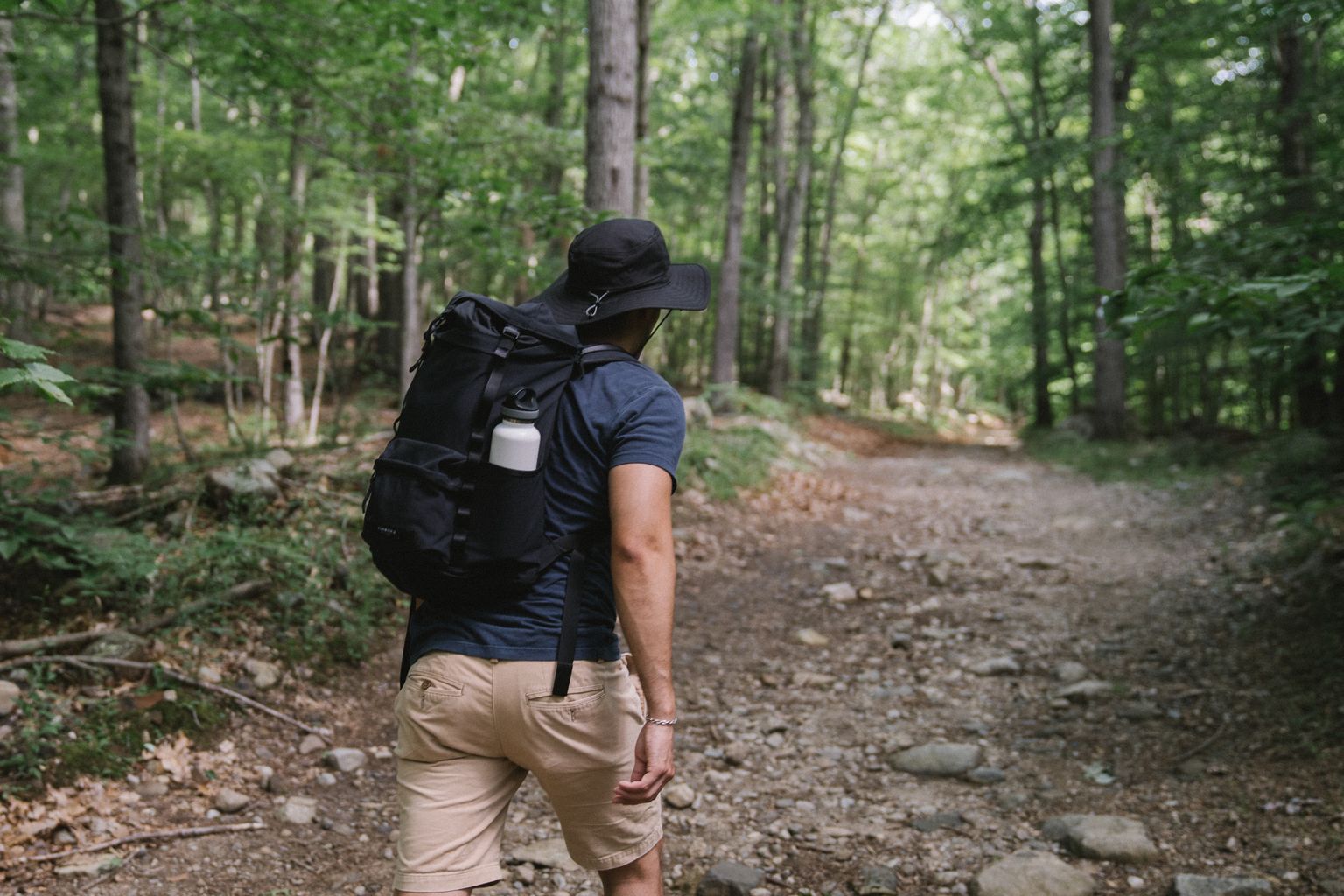
Rucking is walking with weight on your back, usually a sturdy backpack loaded with a weight plate, sandbags or water bottles. The name comes from “rucksack,” and the habit comes from the military, where soldiers train with loaded packs on long ruck marches. For most people, it’s a regular walk with extra load.
The appeal is simplicity. You don’t need a gym membership, a class or new skills. You pick a route, add weight, and go at a pace where you can still hold a conversation.
Is a Weighted Vest the Same as Rucking?
A weighted vest works on the same idea: you carry extra load while you walk. The difference is where the weight sits. A vest spreads it around your chest and upper back, while a ruck hangs it from your shoulders and, with a hip belt, your hips. Much of the lab research on loaded walking uses vests, so those studies give a fair picture of what rucking does to your energy use.
How Many Calories Does Rucking Burn?
A slow ruck with a 40 lb pack burns roughly 90 to 150 more calories per hour than the same walk with no pack, depending on your body weight. The 2024 Adult Compendium of Physical Activities lists a 2.5 mph treadmill walk at 3.5 METs (metabolic equivalents, a measure of effort) and the same walk with a 40 lb load at 4.8 METs.
Here’s what that looks like per hour. These are estimates, worked out as METs x body weight in kilograms x 1.05:
| Body weight | Walking, 2.5 mph (3.5 METs) | Rucking, 2.5 mph, 40 lb (4.8 METs) | Extra per hour |
|---|---|---|---|
| 150 lb | about 250 calories | about 343 calories | about +93 |
| 180 lb | about 300 calories | about 412 calories | about +111 |
| 210 lb | about 350 calories | about 480 calories | about +130 |
| 240 lb | about 400 calories | about 549 calories | about +149 |
Your own numbers will vary with fitness, terrain and how your pack fits. When people ask whether rucking is good for weight loss, these extra 90 to 150 calories an hour are the honest answer to how much it adds. Compendium values are averages for adults aged 19 to 59, so treat the table as a ballpark.
Does Rucking Burn 2 to 3 Times More Calories Than Walking?
The research doesn’t support that claim for a typical ruck. On flat ground at 2.5 mph, the Compendium figures show a 40 lb pack adds about 37% to the energy cost of walking. That’s a solid bump, and it’s a long way from double or triple.
Lab work on weighted vests points the same way. In a 2006 study in Medicine and Science in Sports and Exercise, 10 young adults walked on a treadmill at five speeds wearing vests of 0%, 10%, 15% and 20% of their body weight. The researchers concluded that a weighted vest “can increase the metabolic costs, relative exercise intensity, and loading of the skeletal system during walking” (Puthoff et al., 2006). More load meant more effort, in steady steps.
The big jumps come from hills. The Compendium rates climbing a 3% to 10% grade with a 21 to 40 lb load at 7.5 METs, more than double flat, unloaded walking.
What Changes the Burn: Pack Weight, Speed and Hills
Four things drive how much a ruck burns. Heavier packs cost more energy. Faster walking costs more. Uphill grades raise the cost sharply. Soft surfaces like sand, snow or loose trail add more again.
The Compendium shows how much each lever matters. A gentle 1% to 5% climb at a moderate-to-brisk pace, with no pack at all, rates 5.3 METs, already above a slow 40 lb ruck on flat ground. Carrying a 10 to 20 lb load up a 5% to 10% grade rates 6.5 METs. Pace matters too: on firm, level ground, unloaded walking climbs from 3.0 METs at 2.5 mph to 5.5 METs at 4.0 to 4.4 mph.
For weight loss, hills and a brisk pace usually help more than piling on extra pounds. Both raise the burn without loading your spine as much.
How Does Rucking Help You Lose Weight?
Rucking helps you lose weight by adding extra calorie burn to a habit that’s easy to keep. It works best alongside eating a little less. The CDC puts it plainly: “Most weight loss occurs from decreasing calories.” Activity like rucking adds to the deficit and helps you keep the weight off.
A clinical trial shows how much the food side matters. In the INVEST trial, published in JAMA Network Open in 2025, 150 older adults with obesity followed a weight-loss diet for 12 months. One group also wore a weighted vest about 7 hours a day. All groups lost a similar amount, between 9.0% and 11.2% of their body weight, and the vest did not prevent the hip bone loss that came with weight loss (Beavers et al., 2025). The diet did the heavy lifting.
To put rucking’s share in real numbers, take a 180 lb person who rucks three times a week for 45 minutes with a 40 lb pack at 2.5 mph. Using the Compendium values, those rucks burn roughly 930 calories a week in total, and about 250 of those are extra compared with the same walks without a pack. That’s helpful, and it’s also a small number next to what a single snack can add back. The calories you eat set the pace of weight loss; the ruck adds to it.
Rucking still earns its place. A loaded walk works your legs, hips and core harder than a regular stroll, and our guide on which leg muscles walking works explains which muscles carry you. Rucking is also gentle enough to repeat several times a week, and consistency is what moves the scale over months.
Will Rucking Help You Lose Belly Fat?
Rucking can help you lose belly fat, but only as part of losing fat overall. Your body doesn’t burn fat from the spot you exercise. When you’re in a calorie deficit, you lose fat from all over your body, and your belly shrinks along with the rest.
Where you lose fat first varies from person to person. Some people see their waist change early, while others notice it last.
Rucking helps by adding steady calorie burn without the pounding of running. It also suits people who find long, fast walks boring, since the pack makes a shorter walk feel like a real workout. Pair it with a modest cut in calories and enough protein, and your waistline should follow your overall weight down over time.
Is Rucking Better Than Walking or Running for Weight Loss?
Running burns the most calories per hour, rucking sits in the middle, and the best choice is the one you’ll keep doing. A brisk unloaded walk burns about as much as a slow ruck with 40 lb on your back. The comparison below uses values from the 2024 Compendium:
| Activity | METs | Compendium code |
|---|---|---|
| Walking, treadmill, 2.5 to 2.9 mph | 3.5 | 17352 |
| Brisk walking, 3.5 to 3.9 mph, level | 4.8 | 17200 |
| Rucking, 2.5 mph, 40 lb load | 4.8 | 17434 |
| Hill climbing, 21 to 40 lb load, 3% to 10% grade | 7.5 | 17050 |
| Running, 6 to 6.3 mph (10 min/mile) | 9.3 | 12050 |
The surprise is the second and third rows. Walking briskly at 3.5 mph or more matches the effort of a slow, heavy ruck, with no load on your back. If you prefer a faster pace, our guide to the steps in a 30 minute walk helps you check your speed.
So is rucking good for weight loss compared with the alternatives? It makes the most sense when you can’t or don’t want to walk faster or run. It raises the effort of a slower walk, and it adds a strength element that plain walking lacks.
How to Start Rucking for Weight Loss

To start rucking for weight loss, begin with a light pack, short walks and two or three sessions a week. Then add time first and weight second. Starting too heavy is the most common way beginners end up with sore shoulders or a cranky back.
How Much Weight Should You Start With?
A common starting point is about 10% of your body weight, or roughly 10 to 20 lb for most adults. There’s no official guideline for this, so treat it as a sensible starting range and listen to your body. If 20 lb feels easy after a few weeks, add 5 lb at a time.
Keep the weight high and tight against your back. A loose pack that bounces pulls on your shoulders and changes how you walk.
How Many Days a Week Should You Ruck?
Two or three rucks a week is a good start for most beginners, with rest or plain walks in between. Distance follows from time: at 2.5 to 3 mph, a 45-minute ruck covers about 2 miles. There’s no magic distance for weight loss, so build toward rucks you can repeat comfortably every week. The CDC recommends at least 150 minutes a week of moderate activity for adults, and rucking counts toward that total. As your body adapts, you can ruck more often or go further, as long as you recover well between sessions.
A Simple 6-Week Beginner Plan
The sample plan below builds time before weight. Adjust it to how you feel, and repeat a week if you’re sore.
| Week | Pack weight | Time per ruck | Rucks per week |
|---|---|---|---|
| 1 | 10 lb | 20 minutes | 2 |
| 2 | 10 lb | 30 minutes | 3 |
| 3 | 15 lb | 30 minutes | 3 |
| 4 | 15 lb | 40 minutes | 3 |
| 5 | 20 lb | 40 minutes | 3 |
| 6 | 20 lb | 45 to 60 minutes, one with a hill | 3 |
What Gear Do You Need?
You need a sturdy backpack, ideally with a hip belt and padded straps, plus something heavy and compact to load it with, such as a weight plate or sealed sandbags. Supportive walking shoes matter more than any special pack. Look for a pack where the weight can sit high, close to your shoulder blades, and a hip belt that takes some of the load off your shoulders. Wear socks you already walk in, since long rucks in new socks or shoes are a common cause of blisters.
What Are the Downsides of Rucking?
The main downsides of rucking are extra stress on your joints, sore shoulders and back, and a higher risk of injury if you add weight too fast. Knowing these risks is part of deciding whether rucking is good for weight loss in your situation. Most of them are avoidable with a light start, a well-fitted pack and slow progress. Stand tall, keep your steps short and steady, and don’t lean forward to counter the weight.
Load changes the forces on your body. The same 2006 vest study found that added weight increased the “loading of the skeletal system during walking,” meaning your feet, knees and hips take more force with each step (Puthoff et al., 2006). That’s helpful in small doses and a problem if you jump to a heavy pack.
Other common issues include:
- Shoulder and neck strain from a pack that sits too low or swings
- Lower back aches, especially if you lean forward under the load
- Blisters and hot spots on long rucks in new shoes
- Overuse pain from doing too much, too soon
If your back already gives you trouble, start with unloaded walks first. Our guide on walking with back pain covers how to build up safely. Talk to your doctor before rucking if you have back or joint problems, a heart condition, osteoporosis, or are pregnant.
Frequently Asked Questions
Is 20 lbs enough for rucking?
Yes, 20 lb is plenty for most beginners and a common starting range. It raises the effort of your walk without overloading your back. Stay there until your rucks feel easy, then add 5 lb at a time. Many people get good results without ever going much heavier.
Is a 40 pound ruck heavy?
A 40 lb ruck is heavy for a beginner. It’s the load used in the Compendium’s 4.8-MET treadmill entry, and it puts real strain on your shoulders, back and feet. Work up to it over several weeks or months, and only if lighter loads already feel comfortable.
Is rucking better than running for weight loss?
Running burns more calories per hour, about 9.3 METs at a 10-minute mile compared with 4.8 METs for a slow ruck with 40 lb. Rucking is usually easier to recover from and lower impact than running. For weight loss, the better choice is the one you’ll stick with week after week.
How long does it take to see weight loss results from rucking?
There’s no fixed timeline. Results depend mostly on your calorie deficit, plus how often you ruck and how far. Rucking adds roughly 90 to 150 calories per hour over plain walking with a 40 lb pack, so steady habits over several months matter more than any single ruck.
Can you ruck every day?
Some people ruck daily with a light pack, but most beginners do better with rest days in between. Your feet, back and shoulders need time to adapt to the load. Mix rucks with plain walks, and back off if you notice lingering soreness or joint pain.
Does rucking build muscle?
Rucking works your legs, hips, core and upper back harder than a regular walk, which can build endurance and some strength. It’s a mild strength challenge, though. For real muscle gains, pair rucking with two days a week of muscle-strengthening activity, as the CDC recommends for adults.
Is rucking good for women?
Yes, rucking works the same way for women as for men. Scale the pack to your body size, starting near 10% of your body weight, and build slowly. A pack with a hip belt and a good fit helps keep the load comfortable on smaller frames.
Is rucking good for weight loss at night?
The time of day matters far less than how much you move and what you eat overall. Night rucks count the same as morning ones. If you ruck after dark, wear reflective gear and a light, and stick to well-lit, familiar routes.
Conclusion
Is rucking good for weight loss? Yes, as a steady add-on to a calorie deficit, it adds roughly a third more burn to your walks and keeps you moving. It isn’t a shortcut, and a brisk walk can match a slow ruck.
Start light, add time before weight, and pair your rucks with sensible eating and enough protein, such as the foods in our guide on whether eggs are good for weight loss. Small, steady habits like these are the same approach we take to food, sleep and movement across Simple Health Blog.
This article is for general information only and is not medical advice. Talk to a qualified health professional before starting a new exercise program.
